|
| Sorry, that's the biggest size image I could find. |
&&&&
In a nutshell, Ho argues that it is literally possible to become an immortal through the practice of specific meditation techniques that involved the creation of a secondary spirit body within the existing physical one. This involves creating a "heavenly fetus" that grows to maturity and over the course of many years results in a new non-corporeal body that will leave the adept and slowly learn to live a new, immortal life without being limited by material constraints.
How exactly is someone supposed to respond to this assertion? Could it possibly be true? Are there people in China who use esoteric meditation techniques to dramatically extend their lives and develop super powers? Do some of them become literal immortals who end up residing in paradise with the Jade Emperor?
 |
| Is this picture a realistic depiction of a plausible event? Or is it just a whimsical painting based on an elaborate metaphor? Image from Myths and Legends of China by E. T. C. Werner |
&&&&
I think it's important for casual readers to understand a key element of academic Daoist scholarship: sociologists of religion don't actually care about whether or not a specific idea is "true". It's totally sufficient for them to simply report on a belief system. I realized this point when I tried to read the book Opening the Dragon Gate: the Making of a Modern Taoist Wizard, by Chen Kaiguo and Zheng Shunchao. I emailed a leading expert on Daoism (I forget his name.) Because of all the crazy magical events that were described in the main character's life, I asked him "how could this possibly be true?" . The response by the academic was something to the effect of "whether or not you believe that any of this stuff happened, this sort of book is certainly the sort of thing that Chinese Daoists have been writing about for hundreds of years". In other words, as a professional academic he doesn't even care if it is or isn't true---it's a subject that he studies and writes about, simply as a phenomenon of human society.
That's the attitude of a sociologist. I don't have the luxury of thinking that way because I am a philosopher and a practitioner, as well as someone who writes popular books and a blog. I need to come to some sort of conclusion about whether or not something could actually be "true". This is because there are significant life choices one has to make on the basis of your belief system. If you actually do believe, for example, that it is possible to become immortal and gain super powers by intensively meditating for ten or twenty years, then perhaps you should do it. If, on the other hand, you believe that it isn't possible, then you will spend your limited time on other pursuits. It's as simple as that.
Chungtao Ho says that he has studied Western philosophy, psychology, and science, and is attempting to bring a modern sensibility to the subject.
Over the past hundred years, Western philosophy has begun to influence Chinese thought, inspiring scholars to apply epistemology to interpret internal alchemy. Although this offers a new presentation, it still does not touch the core---which goes far beyond theory and centers on practice, always closely linked to verification of concepts through actual experience. Overall, we can thus say that, despite many years of philosophical discussion and interpretation, the approach of philosophy does not offer a perfect interpretation.
Internal Alchemy for Everyone, p-13
"Epistemology" is the study of what we can and cannot know about a specific topic. This is obviously a pretty important issue when we are talking about experiences that only a very few people have, and, which almost always leave no tangible, physical evidence. It is exactly what we need to think about when we are deciding whether or not to spend a very large chunk of our lives pursuing a specific set of spiritual practices in pursuit of a goal that may or may not actually be feasible to achieve. To be blunt, with regard to internal alchemy, the value of epistemology is that it helps people think about whether or not something "actually happens" or whether it is "merely" a hallucination.
&&&&
With all due respect to Ho, I think it is safe to say that he really doesn't understand what modern scholarship is all about. (I find the term "Western" somewhat annoying---philosophy and science are part of the entire world's heritage, not just a small number of countries in Europe and North America.) I say this because he doesn't mention anywhere in the book the absolutely core element of scholarship: consensus building.
Naive people think of the world as consisting of "facts" and "opinions"---and never the twain shall meet. But the process that resulted in the computer I'm writing this blog with, the vaccines that I am injected with to prevent a flu pandemic, the robots that have created a growing prosperity that has spread to most corners of the globe, etc, all come from something as totally nebulous as a consensus among a small group of scholars who have devoted their lives to participating in a public conversation about the specific set of ideas that define their area of expertise.
A small group of experts associate with each other through membership in elite organizations such as a university department, by subscribing to specialist journals, private correspondence between individuals, and, meeting at conferences. Someone puts forward a hypothesis to explain a given set of observations. And then the very small number of people who have done enough research on the issue to have an informed opinion on the subject enter into a discussion about whether or not that hypothesis makes sense.
As a general rule, they do this not by trying to prove it but rather by disproving it. (Only a deductive discipline---math---works on "proof". Everything else is inductive---evidence based---which can only prove a hypothesis wrong through observation.) They do this by creating experiments that attempt to isolate one particular prediction of the hypothesis. If this prediction actually proves true, this doesn't mean that the hypothesis is correct just that one particular prediction seems to be true in this particular situation. But if the prediction doesn't come true, then they know that there may be something significantly wrong with the entire hypothesis.
Usually, if many experiments are undertaken---and hopefully repeated by several experts---and none of them invalidate any of the predictions, then the hypothesis becomes adopted by the majority of experts in the field. At this point, it becomes a theory. Contrary to how people often use this term, "theory" doesn't mean provisional. Instead, it means an understanding of the world that explains a great many different phenomena and which is accepted by the overwhelming majority of people who have put in the time and effort to have an informed opinion on the subject. Once it is accepted, it then becomes a building block that the scholars use to develop future hypotheses, create new experimental technology, and, future experimentation.
Uninformed people will sometimes assert that one theory displaces another---like when they say that Einstein "proved" Newton "wrong" about gravity. This is nonsense. Einstein's theory of gravitation didn't make any of Newton's insights go away, instead, it "adds to" parts of Newton's explanation that deal with extreme situations that Newton could never have observed---like enormous masses (eg: stars) bending light. Similarly, evolutionary biologists have found that under periods of extremely fast climate change species can evolve much faster than Darwin would have predicted. But this doesn't change the fact that Darwin was right in the vast majority of instances, just that there are odd situations where his theory needs to be "polished" to explain what happens.
&&&&
I suspect that Ho would take issue with the idea that internal alchemy as he describes it doesn't follow a similar method. There are groups of individuals working within an elite Daoist community who practice what he would call "experiments" to learn how to create the heavenly fetus and learn how to ride a phoenix to the Jade Emperor's court. Why isn't this the same thing as Charles Darwin being a member of the Royal Society and studying finches to explain evolution?
One problem immediately comes to mind.
Our modern world of scholarship and science has one very interesting feature: it hangs together. That is to say, as we learn more and more about each individual discipline we find that they compliment and bleed into each other. Physics bleeds into chemistry in a way that atomic theory explains things like the Periodic Table. And, chemistry also explains some elements of psychology---we know, for example, that the human brain contains receptors that connect with many of the chemicals in cannabis, which explains it's many effects on the mind and body. Anthropologists are able to understand important facts about the lifestyle of ancient societies by studying the genetic composition of animal remains found in digs. And even wildlife biologists have explained flocking and schooling behaviour in social animals using computer modeling.
Does any of this wide-ranging, increasingly finely-grained understanding of the world and humanity's place in it leave any room for an individual to create a "spirit fetus" in their body and nurturing it over a decade of practice into an immortal who has super-human abilities?
&&&&
This leads to the next question. Why should anyone bother with this stuff?
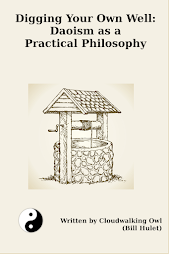
I'm not a sociologist of religion, and I'm certainly not getting any money from this blog other the the odd donation in the tip jar or book sale (which averages around $10/month in royalties.) But I do think that there is something useful in the Daoist tradition or I wouldn't have expended so many hours studying and popularizing it over the years. That is, it can be a way of living your life that is vital and dynamic while at the same time in harmony with nature and humanity. As I explain in my book, Digging Your Own Well, there is a way of living where you don't fight against impossible odds and destroy yourself in the process but at the same time don't give up and "go along" with a fundamentally destructive society. It is a way that helps you squeeze every iota of awareness from life and at the same time helps you come to terms with our own limited understanding of a vast and incomprehensible universe. It doesn't require that you turn your back on personal freedom, and, modern knowledge---but it does augment them with a deep wisdom about what it means to be a human being.
For me, gaining the wisdom of the Dao is the secret elixir of internal alchemy. It is what I seek when I do things like practicing "holding onto the One", "sitting and forgetting", or, taijiquan. It is what I look for when I read Daoist texts. Whenever I come across the word "Xian", or talk about Daoists and Daoism, I never use the common word "immortal". Instead I use the phrase "realized man".
From this point of view, the idea of creating a "heavenly fetus" over a long period of sustained spiritual practice is a metaphor for reforming my personality and becoming a better person. And the amazing spiritual powers like riding Phoenixes or joining the Jade Emperor's Court, are about the serenity and wisdom that come from that reformation. Ask a reformed opium addict or alcoholic about what is more important---power over others or the ability to overcome their addiction, and I suspect that they would opt for the latter over the former every time. That's real power. Immortality is much the same. What value would there be in living forever if it meant that if you had to watch everyone you love grow old and die? As a Zen story says, it is a real blessing to simply be in harmony with the natural order of life and death: "father dies, son dies, grandson dies".
&&&&
I started out suggesting that in all religions one has to decide whether or not you see the texts as being literally factual, or metaphoric. All the faiths of the world have had to deal with conflicts with modern science and culture. And each of them, in turn, has split along this fault line into "fundamentalist" and "reform" bodies. It is hardly surprising that Daoism also has this tendency. Ho's book is a suggestion of what a fundamentalist type of Daoist spirituality might look like. I'm a modern, educated Canadian man and this sort of Daoism has little appeal to me. Unfortunately, a lot of what calls itself "Taoist" in the West comes down to not much more than "don't worry, be happy" and the Dao of Pooh. My hope is that I can push a little bit against both tendencies with my writing.
With all due respect to Ho, I think it is safe to say that he really doesn't understand what modern scholarship is all about. (I find the term "Western" somewhat annoying---philosophy and science are part of the entire world's heritage, not just a small number of countries in Europe and North America.) I say this because he doesn't mention anywhere in the book the absolutely core element of scholarship: consensus building.
Naive people think of the world as consisting of "facts" and "opinions"---and never the twain shall meet. But the process that resulted in the computer I'm writing this blog with, the vaccines that I am injected with to prevent a flu pandemic, the robots that have created a growing prosperity that has spread to most corners of the globe, etc, all come from something as totally nebulous as a consensus among a small group of scholars who have devoted their lives to participating in a public conversation about the specific set of ideas that define their area of expertise.
A small group of experts associate with each other through membership in elite organizations such as a university department, by subscribing to specialist journals, private correspondence between individuals, and, meeting at conferences. Someone puts forward a hypothesis to explain a given set of observations. And then the very small number of people who have done enough research on the issue to have an informed opinion on the subject enter into a discussion about whether or not that hypothesis makes sense.
As a general rule, they do this not by trying to prove it but rather by disproving it. (Only a deductive discipline---math---works on "proof". Everything else is inductive---evidence based---which can only prove a hypothesis wrong through observation.) They do this by creating experiments that attempt to isolate one particular prediction of the hypothesis. If this prediction actually proves true, this doesn't mean that the hypothesis is correct just that one particular prediction seems to be true in this particular situation. But if the prediction doesn't come true, then they know that there may be something significantly wrong with the entire hypothesis.
Usually, if many experiments are undertaken---and hopefully repeated by several experts---and none of them invalidate any of the predictions, then the hypothesis becomes adopted by the majority of experts in the field. At this point, it becomes a theory. Contrary to how people often use this term, "theory" doesn't mean provisional. Instead, it means an understanding of the world that explains a great many different phenomena and which is accepted by the overwhelming majority of people who have put in the time and effort to have an informed opinion on the subject. Once it is accepted, it then becomes a building block that the scholars use to develop future hypotheses, create new experimental technology, and, future experimentation.
Uninformed people will sometimes assert that one theory displaces another---like when they say that Einstein "proved" Newton "wrong" about gravity. This is nonsense. Einstein's theory of gravitation didn't make any of Newton's insights go away, instead, it "adds to" parts of Newton's explanation that deal with extreme situations that Newton could never have observed---like enormous masses (eg: stars) bending light. Similarly, evolutionary biologists have found that under periods of extremely fast climate change species can evolve much faster than Darwin would have predicted. But this doesn't change the fact that Darwin was right in the vast majority of instances, just that there are odd situations where his theory needs to be "polished" to explain what happens.
&&&&
I suspect that Ho would take issue with the idea that internal alchemy as he describes it doesn't follow a similar method. There are groups of individuals working within an elite Daoist community who practice what he would call "experiments" to learn how to create the heavenly fetus and learn how to ride a phoenix to the Jade Emperor's court. Why isn't this the same thing as Charles Darwin being a member of the Royal Society and studying finches to explain evolution?
One problem immediately comes to mind.
Our modern world of scholarship and science has one very interesting feature: it hangs together. That is to say, as we learn more and more about each individual discipline we find that they compliment and bleed into each other. Physics bleeds into chemistry in a way that atomic theory explains things like the Periodic Table. And, chemistry also explains some elements of psychology---we know, for example, that the human brain contains receptors that connect with many of the chemicals in cannabis, which explains it's many effects on the mind and body. Anthropologists are able to understand important facts about the lifestyle of ancient societies by studying the genetic composition of animal remains found in digs. And even wildlife biologists have explained flocking and schooling behaviour in social animals using computer modeling.
Does any of this wide-ranging, increasingly finely-grained understanding of the world and humanity's place in it leave any room for an individual to create a "spirit fetus" in their body and nurturing it over a decade of practice into an immortal who has super-human abilities?
&&&&
This leads to the next question. Why should anyone bother with this stuff?
I'm not a sociologist of religion, and I'm certainly not getting any money from this blog other the the odd donation in the tip jar or book sale (which averages around $10/month in royalties.) But I do think that there is something useful in the Daoist tradition or I wouldn't have expended so many hours studying and popularizing it over the years. That is, it can be a way of living your life that is vital and dynamic while at the same time in harmony with nature and humanity. As I explain in my book, Digging Your Own Well, there is a way of living where you don't fight against impossible odds and destroy yourself in the process but at the same time don't give up and "go along" with a fundamentally destructive society. It is a way that helps you squeeze every iota of awareness from life and at the same time helps you come to terms with our own limited understanding of a vast and incomprehensible universe. It doesn't require that you turn your back on personal freedom, and, modern knowledge---but it does augment them with a deep wisdom about what it means to be a human being.
For me, gaining the wisdom of the Dao is the secret elixir of internal alchemy. It is what I seek when I do things like practicing "holding onto the One", "sitting and forgetting", or, taijiquan. It is what I look for when I read Daoist texts. Whenever I come across the word "Xian", or talk about Daoists and Daoism, I never use the common word "immortal". Instead I use the phrase "realized man".
From this point of view, the idea of creating a "heavenly fetus" over a long period of sustained spiritual practice is a metaphor for reforming my personality and becoming a better person. And the amazing spiritual powers like riding Phoenixes or joining the Jade Emperor's Court, are about the serenity and wisdom that come from that reformation. Ask a reformed opium addict or alcoholic about what is more important---power over others or the ability to overcome their addiction, and I suspect that they would opt for the latter over the former every time. That's real power. Immortality is much the same. What value would there be in living forever if it meant that if you had to watch everyone you love grow old and die? As a Zen story says, it is a real blessing to simply be in harmony with the natural order of life and death: "father dies, son dies, grandson dies".
&&&&
I started out suggesting that in all religions one has to decide whether or not you see the texts as being literally factual, or metaphoric. All the faiths of the world have had to deal with conflicts with modern science and culture. And each of them, in turn, has split along this fault line into "fundamentalist" and "reform" bodies. It is hardly surprising that Daoism also has this tendency. Ho's book is a suggestion of what a fundamentalist type of Daoist spirituality might look like. I'm a modern, educated Canadian man and this sort of Daoism has little appeal to me. Unfortunately, a lot of what calls itself "Taoist" in the West comes down to not much more than "don't worry, be happy" and the Dao of Pooh. My hope is that I can push a little bit against both tendencies with my writing.




 Posts
Posts