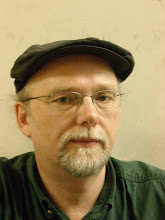
He was a gruff old man who was very close to retirement. He'd gone to Korea as a soldier during the war and ended up staying on in one of the Temples. I mentioned that I was interested in Zen and he did his best to discourage me. Transcendental meditation was, he opined, a much easier way to find some wisdom in life. He said that there was a temple in Toronto, but I had to be "hard core" or they'd simply throw me out the front door. This is a fairly standard trope from Zen---it's not supposed to be an easy way to gain realization.
&&&&
Teachers have tended to create easier forms of gaining wisdom "for the masses". These include things like reciting mantras
These are very standard moves across all religions. Christianity emphasizes devotional practices, but it also has most of the others too. For example, there is a tradition of chanting in Eastern Orthodoxy that is focused on repeating the mantra "Lord Jesus Christ, Son of God, have mercy on me, a poor sinner". (The Eastern Church usually says that this is nothing like Eastern chanting, but that's nonsense.)
 |
| People practicing a specific posture in a Hatha Yoga class Photo by"Trollderella", c/o the Wikicommons |
Indian spiritual teachers have codified the different spiritual "tactics", or "yogas", or "kung fus" one can follow in pursuit of spiritual insight and named them accordingly. Chanting correlates with Japa Yoga, devotional practices correlate with Bhakti Yoga, the route of good works (think Gandhi) is called Karma Yoga, ritual is covered by Tantra Yoga. I'd suggest that Zen is most like Jnana Yoga, or, "the path of knowledge".
&&&&
The path of knowledge exists in opposition to the path of devotion or ritual. It's about actually knowing the truth instead of having faith or being a loving person. This is an important point, and one I rarely see spelled out in any detail.
Personally, I've always been consumed by wanting to know things. This isn't just a question of curiosity. More importantly---for me at least---it's a strong ethical commitment to the idea that we shouldn't make decisions without finding out the truth that underlies the situation. This has made me the "odd man out" for most of my life because I tend to get absolutely furious with people who are quite happy to "fudge the facts" or even lie in order to get their way. This recently came home to me in an argument I had with some folks about a Canadian academic who has been spreading a bald-faced lie about an abstruse part of Canadian governance in order to whip right-wing Americans into a frenzy. The result has been that this guy seems to have made a fortune on social media and public speaking engagements convincing people that Canada is on the verge of being taken over by radical Muslims.
My argument is that this sort of behaviour should be grounds for dismissing this guy from his tenured university position and revoking his Phd---along the lines of taking away a doctor's license for malpractice. The response by most people has been to suggest that I have a screw loose and I simply don't understand the importance of freedom of speech, and, tenure. What I'd argue is that yes, I do understand the importance of free speech, but these folks don't understand how much damage fake news can have on the lives of innocent people. A small percentage of people actually believe this stuff when they hear it and believe that they need to take action. The result are terrorist attacks on Muslims, like the recent one in Quebec City that killed six and wounded nineteen others.
&&&&
I raised the above example not because I want to rehash the issues of "fake news" and the tremendous resurgence of Fascist demagoguery our society is currently going through, but simply because I wanted to point out a strange way in which my mental processes are different from almost everyone else. That is, I do not blame the person who picks up a gun and shoots others nearly as much as I blame the person who bombarded the shooter with propaganda about the perfidy of the victims in order to raise money or promote a political agenda. At least the shooter has the courage of his convictions. But the propagandist may not---and I suspect often doesn't---really believe what he is saying, but just does so to take advantage of the gullible.
In effect, I am making the same point that the Gospels make in Matthew 7:15, "Beware of false prophets, which come to you in sheep's clothing, but inwardly they are ravening wolves."
Later on, Christ also makes a very strong statement in a similar vein. When asked "Who is the greatest in Heaven's domain?", he replies that saying that it is the people who are like little children. But then he goes on to say that
"Those who entrap one of these little trusting souls would be better off to have millstones hung around their necks and be drowned in the deepest part of the sea!" (Matthew 18:1-6, Scholar's Version of the Gospels)
If this wasn't strong enough, Jesus goes on to curse the people who try to fool the gullible.
"Dam the world for the traps it sets! Even though it's inevitable for traps to be set, nevertheless, damn the person who sets such traps." (Matthew 18:7)
Looking at these quotes from the Gospels has got me thinking. I've never wanted to put a millstone around the neck of one of these Alt-right propaganda types---but I have contemplated tying ropes attached to cement blocks around their necks and tossing them through holes cut in the ice covering Lake Ontario. (I was actually startled to realize that Jesus's level of rage is comparable to my own. Wow!)
&&&&
So what has this got to do with Zen Buddhism and Bhakti yoga?
Well, the path of knowledge really is too difficult for most people to follow. It involves a constant struggle to fight against your preconceived notions and to stare totally honestly into the face of reality and accept what you see---no matter what. In Zen the mythical story of Bodhidharma staring at the wall of cave for years in order to deepen his understanding illustrates the awful effort that you have to put into tearing away all your illusions.
 |
| Bodhidharma staring at the wall I got the picture from a site without attribution, But it said it was from the middle ages, so I'm assuming it's public domain. |
Even transcendental meditation is too hard for many people, though. That is why religions instead turn towards the paths of faith and devotion. "Faith" is the idea that we simply have to have hope that it all makes sense in one way or another. If life is a terrible horror for most people, have faith that there is a life after death and everyone gets their just rewards there. Or if that doesn't work, have faith that there is a great God in the sky who's great intelligence is so beyond us, that he sees a way in which it all does make sense. If faith doesn't work for you, there's always devotion. You school yourself to love god or the church or the rituals so much that everything else becomes of secondary importance. The point of faith and devotion is to stop even trying to make sense of things, because it just hurts too much to make the effort.
I can understand this. Most people don't have the time or inclination to put their entire life into the process of gaining wisdom. I put in ten years studying philosophy. I've spent enormous amounts of time meditating, meeting with spiritual teachers, going on retreats, reading sacred and philosophical texts, studying martial arts, etc. Most folks would rather have a career, raise a family, travel, etc. For them the path of knowledge is simply not a "live option".
(Quote from a blog that I don't endorse, but this is a widely used apocryphal story and this version is just as good as any other for the purposes of this post.)A proud young man came to Socrates asking for wisdom. He walked up to him and said, “O great Socrates, I come to you for wisdom.” Socrates, recognizing a pompous fool when he saw one, led him down to the sea and took him chest deep into the water. Then he asked him, “What did you say you wanted?” “Wisdom, O great Socrates,” said the young man.
Socrates put his strong hands on the man’s shoulders and pushed him under. Thirty seconds later Socrates let him up. “What do you want?” he asked again. “Wisdom,” the young man sputtered, “O great and wise Socrates.” Socrates pushed him under again. Thirty seconds, thirty-five, forty – then Socrates let him up. The man was gasping. “What do you want, young man?”
Between heavy breaths the fellow wheezed, “Wisdom! O wise and wonderful…” Socrates jammed him under again – forty seconds passed then fifty – then he let him up. “What do you want?” “Air!” the young man yelled. “I need air!” “When you want wisdom as much as you have just wanted air, then you will begin to find wisdom.”
&&&&
I can remember when I was "cloudwalking" with Roman Catholics that this decision to pursue knowledge instead of faith was always an unbridgeable crevasse that separated me from them. They simply couldn't understand my commitment to knowledge, and for a long time I couldn't understand their insistence on faith. The other day I woke up with an insight simply about how much different my life would have been if I hadn't had that bizarre obsession with wisdom that Socrates talks about in the above story.
Wisdom is a funny thing. My experience is that it always comes at the price of suffering. Even if it isn't the result of having a particularly painful experience, I have found that deep realization often comes from a period of something very like depression. What happens is that for days I feel deeply introverted and unhappy with life, but then a moment comes when the clouds part and I understand some deep mystery of life that has perplexed me for a long, long time. John of the Cross called this "the dark night of the soul", Saint Ignatius called this process "desolation followed by consolation". My dear sweet wife simply calls it the alternation of Yin and Yang.
&&&&
The question of happiness and the pursuit of wisdom is something that a lot of people have thought about. It is especially relevant to Utilitarians, or, the school of philosophy that says that moral issues can be settled by creating the greatest amount of good (ie: "utility") for the greatest number of people. One of its founders, John Stuart Mill, raised the wisdom question in the following way:
It's even worse than that. A few people are "fated" to seek knowledge, but most don't. When I was talking to that Zen priest all those years ago, I mentioned something about having had a wild, weird childhood that shattered any illusions I might have had about ordinary life. He instantly responded with "that's just the price of admission" and mentioned his time in the Korean war. (No specifics, but I suspect that he saw some bad craziness. My understanding is that the Canadian contingent got more than it's fair share.) This is where the issue of "fate" or "karma" kicks in. Some people are like Socrates and need knowledge the same way most people need air. Most folks just aren't like that. They are content to just rely upon faith or devotion.
&&&&
I understand why people lean upon faith. A lot of very bad things happen in life and if it doesn't make any sense (and, to be honest, a lot really doesn't---life is absurd.) It can be a tremendously useful strategy to simply force yourself to assume that it all makes sense and go from there. And devotion is simply a variation in that theme. "Jesus loves me this I know, 'cause the Bible tells me so---". You can't love God unless you have faith that he exists and gives a damn about you and your petty concerns.
But if you hear a particularly scary story about climate change, or you get bummed out because of some horrible atrocity being committed against people on the other side of the planet, or watch YouTube and some horribly trained police officer kills someone, or read about some corporation fudging research to get a dangerous medicine put on the market, or,----you fill in the blank----you still have to wake up in the morning, put your boots on, and, head off to work. Lots of people just don't bother paying attention to the world around them. Lots of others don't really care all that much about what happens to other people. But there are still lots of sensitive types who get upset about this kind of stuff and they don't know how to deal with the pain. For them, faith can be a tremendously good thing because it helps them continue to be functional in a world that they experience as a never-ending horror show.
I finally get the appeal of faith. But it simply doesn't work for me. My mind just isn't designed to work that way. That's why I'm a Daoist who is committed to the path of knowledge instead of the path of faith or devotion. We need people to seek out knowledge because that is how our society moves forward. But I also suspect that we also need people who have faith to keep the the wheels moving.
&&&&
Out comes the begging bowl. Believe me, I probably hate writing these "asks" more than you do reading them. But if I don't remind people that the guys who tap their fingers on the keyboards and rack their brains coming up with the ideas deserve to make some money too, we continue to support the illusion that all this stuff on the Internet just comes for "free". Not likely. And the guys who do the coding and work on the advertising, and the managers and investors that stand behind them, certainly aren't working for free. In fact, they are making astronomical profits. Do you like that? If not, then remember to support the "creatives" in the best way you can. Toss something in the tip jar, do a little subscription, buy a book, or, just tell your "friends" on social media that they might like to read this blog.
Wisdom is a funny thing. My experience is that it always comes at the price of suffering. Even if it isn't the result of having a particularly painful experience, I have found that deep realization often comes from a period of something very like depression. What happens is that for days I feel deeply introverted and unhappy with life, but then a moment comes when the clouds part and I understand some deep mystery of life that has perplexed me for a long, long time. John of the Cross called this "the dark night of the soul", Saint Ignatius called this process "desolation followed by consolation". My dear sweet wife simply calls it the alternation of Yin and Yang.
 |
| John Stuart Mill Image c/o Wiki Commons, a pretty smart guy. |
The question of happiness and the pursuit of wisdom is something that a lot of people have thought about. It is especially relevant to Utilitarians, or, the school of philosophy that says that moral issues can be settled by creating the greatest amount of good (ie: "utility") for the greatest number of people. One of its founders, John Stuart Mill, raised the wisdom question in the following way:
“It is indisputable that the being whose capacities of enjoyment are low, has the greatest chance of having them fully satisfied; and a highly endowed being will always feel that any happiness which he can look for, as the world is constituted, is imperfect. But he can learn to bear its imperfections, if they are at all bearable; and they will not make him envy the being who is indeed unconscious of the imperfections, but only because he feels not at all the good which those imperfections qualify.The important point here is "they only know their own side of the question". That's why realization is so mysterious. You either get it or you don't.
It is better to be a human being dissatisfied than a pig satisfied; better to be Socrates dissatisfied than a fool satisfied. And if the fool, or the pig, is of a different opinion, it is only because they only know their own side of the question.” (Utilitarianism)
It's even worse than that. A few people are "fated" to seek knowledge, but most don't. When I was talking to that Zen priest all those years ago, I mentioned something about having had a wild, weird childhood that shattered any illusions I might have had about ordinary life. He instantly responded with "that's just the price of admission" and mentioned his time in the Korean war. (No specifics, but I suspect that he saw some bad craziness. My understanding is that the Canadian contingent got more than it's fair share.) This is where the issue of "fate" or "karma" kicks in. Some people are like Socrates and need knowledge the same way most people need air. Most folks just aren't like that. They are content to just rely upon faith or devotion.
&&&&
I understand why people lean upon faith. A lot of very bad things happen in life and if it doesn't make any sense (and, to be honest, a lot really doesn't---life is absurd.) It can be a tremendously useful strategy to simply force yourself to assume that it all makes sense and go from there. And devotion is simply a variation in that theme. "Jesus loves me this I know, 'cause the Bible tells me so---". You can't love God unless you have faith that he exists and gives a damn about you and your petty concerns.
But if you hear a particularly scary story about climate change, or you get bummed out because of some horrible atrocity being committed against people on the other side of the planet, or watch YouTube and some horribly trained police officer kills someone, or read about some corporation fudging research to get a dangerous medicine put on the market, or,----you fill in the blank----you still have to wake up in the morning, put your boots on, and, head off to work. Lots of people just don't bother paying attention to the world around them. Lots of others don't really care all that much about what happens to other people. But there are still lots of sensitive types who get upset about this kind of stuff and they don't know how to deal with the pain. For them, faith can be a tremendously good thing because it helps them continue to be functional in a world that they experience as a never-ending horror show.
I finally get the appeal of faith. But it simply doesn't work for me. My mind just isn't designed to work that way. That's why I'm a Daoist who is committed to the path of knowledge instead of the path of faith or devotion. We need people to seek out knowledge because that is how our society moves forward. But I also suspect that we also need people who have faith to keep the the wheels moving.
&&&&
Out comes the begging bowl. Believe me, I probably hate writing these "asks" more than you do reading them. But if I don't remind people that the guys who tap their fingers on the keyboards and rack their brains coming up with the ideas deserve to make some money too, we continue to support the illusion that all this stuff on the Internet just comes for "free". Not likely. And the guys who do the coding and work on the advertising, and the managers and investors that stand behind them, certainly aren't working for free. In fact, they are making astronomical profits. Do you like that? If not, then remember to support the "creatives" in the best way you can. Toss something in the tip jar, do a little subscription, buy a book, or, just tell your "friends" on social media that they might like to read this blog.


 Posts
Posts